How to do UGC Right (as a SaaS)
Case Study • 1,200 words
★ ⁺. ⊹ . ⊹ ★ ⁺. ⊹ ★⁺. (\_(\ /)_/) ( ) ( ) / | | \ ( O | | O )
Back
For SaaS companies, UGC (user-generated content) is often treated as a shortcut to virality. A few creators, a few posts, maybe a lucky algorithmic hit, and the product feels like it’s everywhere.
But most of the time, that momentum fades just as quickly.
This case study argues for a different definition of success:
UGC done right isn’t about views or mindshare alone
But whether the content itself fits the market they're selling to
Using Cluely and Wispr Flow as contrasting examples, this article examines how UGC can reveal content–market fit (CMF), what it looks like when that fit is missing, and why durability and efficiency (often reflected through stable CPM) matter more than raw virality.
Most SaaS UGC programs optimize for views. Popularity feels good, but they’re weak signals for what actually matters in SaaS:
Product-market fit
Pipeline contribution
Cost efficiency
Repeatability
And the result is a common failure mode: mass attention with no clear path to revenue.
The Problem With “Viral” UGC in SaaS
Figure 1. "Everyday Bro" by Jake Paul (2017)
The company leaned into polarizing, mass-appeal content and was among the first in tech to run a large-scale UGC program. Their approach was distinct, culturally legible, and generated a level of momentum across the tech ecosystem that few companies have been able to replicate. However, that momentum proved difficult to sustain.
Cluely’s UGC optimized for attention rather than resonance with a specific audience. While the content performed broadly, it did not consistently speak to a clear buyer persona. The messaging varied by format, relied heavily on novelty, and lacked a stable narrative that could persist across creators and time.
As a result, the content achieved visibility without durability. Performance peaked, then decayed as the novelty wore off — illustrating that virality alone does not indicate content–market fit. In Cluely’s case, the content fit the algorithm, but not the market.
Case 1: Content-Market Fit — Cluely
Wispr’s UGC success wasn’t just operational excellence, but a reflection of strong product–market fit.
Creators converged on the same value proposition. Across dozens of creators, Wispr's content consistently centered on speed, reduced friction, and workflow acceleration because that's what users truly felt. When creators independently tell the same story, that's PMF. The product's values were intuitive and easy to understand which is rare & crucial.
You might wonder how a UGC-led strategy like this converts to enterprise customers. In practice, the decision to adopt a product like Wispr Flow isn’t driven by a single TikTok or post, but whether the product feels obviously useful once evaluated. Wispr’s content consistently demonstrated real use cases at scale, and by the time a buyer reached a demo or trial the value proposition was already clear. In that sense, Wispr’s UGC wasn’t a top-of-funnel gimmick but distributed product marketing.
According to public breakdowns shared by Tobin Tang, Wispr’s program achieved 500 million views at a $0.74 CPM.
Case 2: UGC as a demand engine — Wispr Flow
Taken together, Cluely and Wispr Flow illustrate the difference between content that spreads and content that fits. Both companies achieved reach through UGC, but only one demonstrated content–market fit. In Cluely’s case, performance depended on novelty and polarization; once that novelty faded, so did momentum. Wispr’s content, by contrast, remained stable across creators and formats, suggesting that the underlying message resonated with a specific audience rather than the algorithm alone.



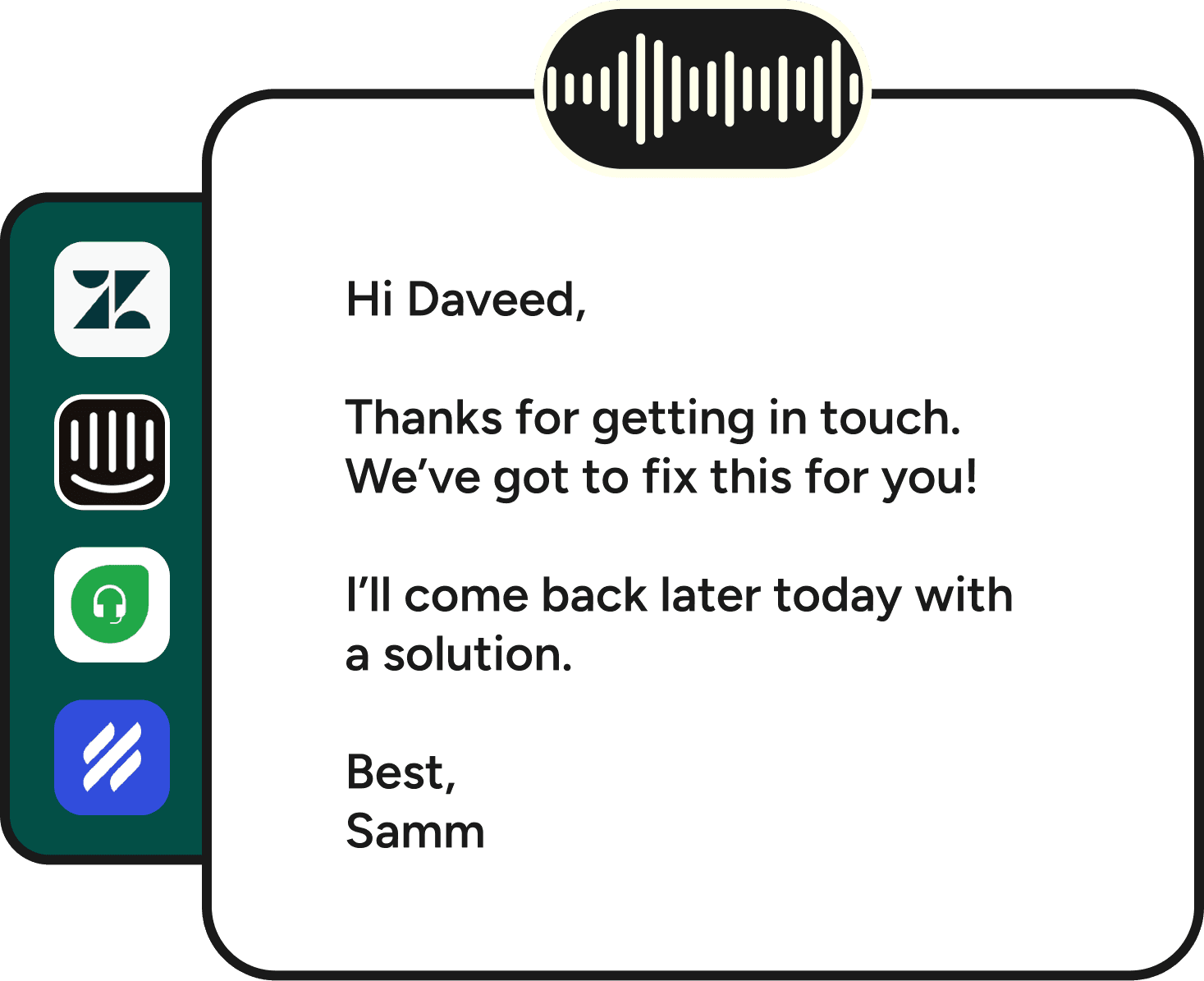

Figure 3. Wispr Flow graphic
The Pattern Across Both Cases
According to public breakdowns shared by Tobin Tang, Wispr’s program achieved 500 million views at a $0.74 CPM.
UGC shows content–market fit when:
Different creators independently land on the same message
Repeating a format improves performance rather than exhausting it
CPM stabilizes or decreases over time
Comments reflect recognition (“this is exactly my workflow”)
Content doubles as education, not explanation
UGC lacks content–market fit when:
Each post needs a new hook or shock factor
Performance relies on polarization or controversy
CPM rises as novelty fades
Comments ask “what is this?” or “who is this for?”
Creators require tight scripting to perform
For SaaS companies, especially those selling into teams or enterprises, content that fits the market compounds over time. It educates buyers before they ever enter a funnel, reduces the cost of experimentation, and creates familiarity without fatigue. Virality, by contrast, produces attention without learning.
So why does CMF matter more than virality?
UGC isn’t universally good or bad, it’s conditional. Whether it works depends on how well your product’s value can be communicated through content, and whether that content fits a specific market. Based on the contrasting outcomes of Cluely and Wispr Flow, there are a few practical guidelines teams can use to evaluate and design their own UGC strategy.
1. Start by Studying UGC That Already Fits Your Market
Before launching anything, look closely at successful UGC programs within your own industry niche.
What matters isn’t copying formats wholesale, but identifying:
The core message that repeats across creators
The way the product is framed in everyday use
The balance between education and entertainment
If a UGC program demonstrates clear content–market fit, its playbook is often more transferable than its surface-level creativity.
Products with strong content–market fit tend to have legible value propositions.
Wispr Flow could have positioned itself with a highly specific, niche message (e.g. dictating product ideas directly into a Notion page when you’re too tired to type). Instead, its UGC simplified the value to something instantly familiar: talking instead of typing.
That framing worked because:
It mapped to an existing mental model (voice dictation)
It reduced explanation overhead
It made the improvement obvious without technical detail
In UGC, clarity beats specificity. Familiarity lowers the cost of understanding.
3. Be Honest About Whether UGC Actually Benefits
UGC isn’t free. Even when CPM is low, running a program requires:
Management
Iteration
Creative coordination
Opportunity cost
For many B2B or enterprise-focused companies, UGC can be more expensive than it appears, especially if the product’s value is hard to demonstrate visually or quickly.
By contrast, B2C and prosumer products often benefit disproportionately from UGC because:
The audience is broad
The use cases are intuitive
The “aha” moment is easy to show
The key question isn’t “Can we do UGC?” but “Does UGC actually surface our value?”
4. Demo the Product in a Way That Matches Real Usage
UGC only demonstrates content–market fit when the use cases shown align with how customers actually use the product.
Cluely’s content often depicted exaggerated or playful scenarios like “cheating” through social situations. It technically uses the product but didn’t reflect its most meaningful applications. While these videos performed well algorithmically, they distorted the product’s core value.
If the demo only works in funny use cases, the content probably doesn’t fit the market.
How to Apply This to Your Own Company
UGC works best when it clarifies rather than entertains, and when repetition strengthens the message instead of exhausting it. In practice, this is less about execution quality and more about content–market fit. When the message truly fits the market, UGC becomes a durable signal amplifier. When it doesn’t, even high-performing content risks becoming an expensive distraction.
Final Takeaway
2. Simplify the Product Narrative as Much as Possible
Figure 2. Cluely UI
Figure 4. Cluely Launch Video
Figure 3. Wispr Flow's UGC Analytics
Figure 5. Wispr Flow graphic
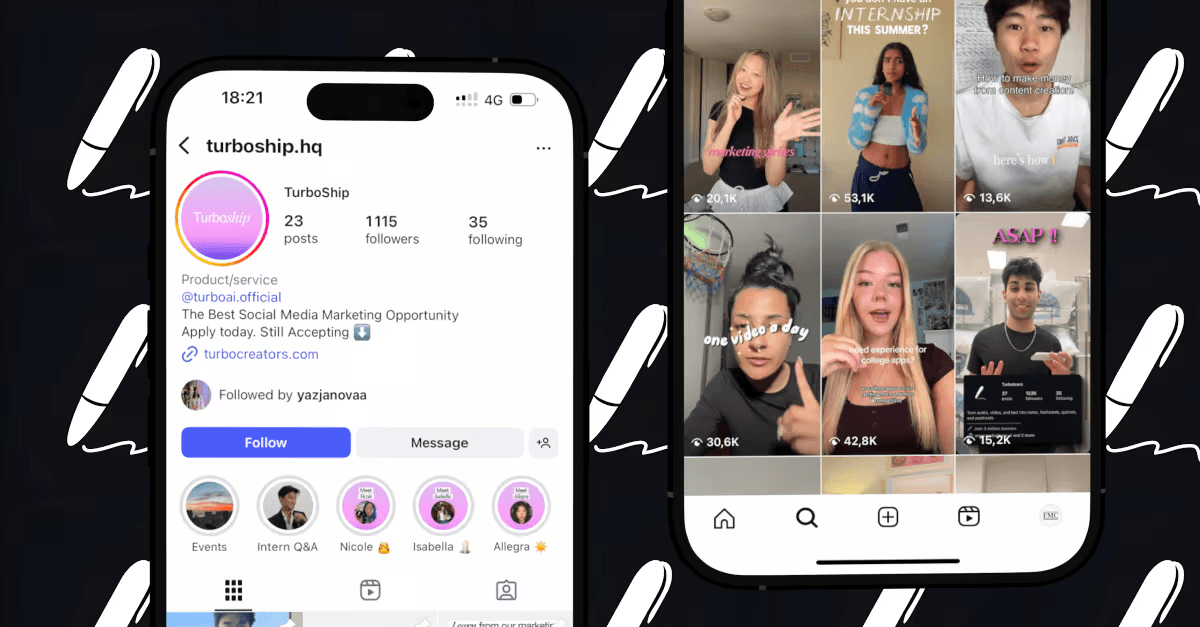
Figure 5. TurboLearn AI graphic